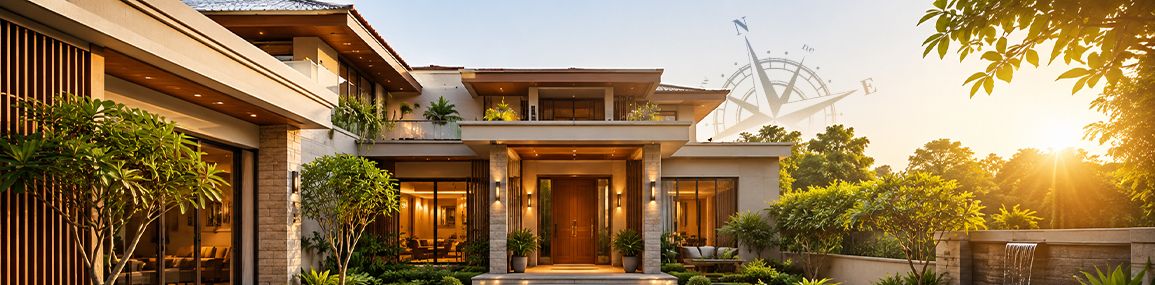
What is Vastu Shastra? Meaning, Benefits & How It Affects Your Home
Discover what Vastu Shastra is, its meaning, core principles, and how it affects your home. Learn the benefits of Vastu and book an expert online Vastu consultation with JyotirVastu Academy today.

JyotirVāstu Academy Faculty Team
Share this article
Millions of people across India and the world live in beautiful homes yet struggle with persistent financial stress, health problems, broken relationships, or a constant feeling that something is simply not right. The answer to their struggles often lies not in their circumstances but in the very walls around them. This is where Vastu Shastra becomes a transformative force.
Understanding what is Vastu Shastra and how it works is the first step toward creating a home that genuinely supports your health, prosperity, and peace of mind.
What is Vastu Shastra? (Meaning and Definition)
Vastu Shastra is an ancient Indian science of architecture and spatial arrangement. It governs how the design, layout, and orientation of a built space directly influence the health, wealth, happiness, and overall well-being of the people living or working within it.
The word breaks down into two parts. Vastu means dwelling or built environment. Shastra means science or scriptural knowledge.
It is a comprehensive system rooted in Vedic wisdom, particularly the Atharva Veda and ancient texts like the Manasara and Mayamata. Vastu Shastra dates back more than 5,000 years and was originally used to design temples, royal palaces, and entire planned cities. Today it is applied to homes, offices, factories, hospitals, and commercial spaces across the world.
Vastu Shastra aligns human habitation with the five fundamental elements of nature, known as the Pancha Bhutas. These are Earth (Prithvi), Water (Jal), Fire (Agni), Air (Vayu), and Space (Akasha). When these five elements exist in balance within your home, you naturally experience greater vitality, abundance, and harmony.
The Core Principles of Vastu Shastra
Vastu Shastra is built on several interconnected principles that work together to create energetically balanced spaces.
1. The Five Elements (Pancha Bhutas)
Every home is a microcosm of five natural elements. Vastu Shastra prescribes specific zones for each element based on their natural positions in the cosmos.
Earth (Prithvi) governs the South-West direction and represents stability, patience, and groundedness. The South-West zone of your home should carry the maximum weight and height, which is why the master bedroom belongs here.
Water (Jal) governs the North-East direction and represents flow, clarity, and abundance. This is why underground water tanks, wells, and prayer spaces find their ideal location in the North-East.
Fire (Agni) governs the South-East direction and represents energy, transformation, and digestion. The kitchen is placed in the South-East to harness the natural fire energy of this zone.
Air (Vayu) governs the North-West direction and represents movement, communication, and change. Guest bedrooms and storage areas align well with the North-West zone.
Space (Akasha) governs the centre of the home, called the Brahmasthan, and represents consciousness, expansion, and infinite potential. This central zone must always remain open and unobstructed.
2. The Eight Directions (Ashtadisha)
Vastu Shastra assigns specific cosmic energies to each of the eight directions. Every direction is governed by a presiding deity and a natural force, and the placement of rooms, entrances, and objects must honour those energies.
North is governed by Kuber, the lord of wealth. Financial activity, cash storage, and business dealings thrive when aligned with the North zone.
East is the direction of the rising sun, governed by Indra. The main entrance and windows placed in the East fill the home with solar energy, vitality, and optimism.
South is governed by Yama and represents discipline and transformation. Heavy construction, staircases, and storage work well in the South zone.
West is governed by Varuna and represents stability and social connection. Living rooms, dining areas, and children's study rooms align with the West zone.
North-East (Ishan Kona) is the most sacred and spiritually potent corner of any structure. Prayer rooms, meditation spaces, and water features here.
South-East (Agni Kona) is the zone of fire and is ideal for kitchens, electrical panels, and generators.
South-West (Nairutya Kona) is the zone of stability and strength. The master bedroom and heavy storage belong here. This corner should never be light or open.
North-West (Vayu Kona) is the zone of air and movement. Guest rooms, garages, and toilets find a suitable position in this zone.
3. The Brahmasthan
The geometric centre of any building is called the Brahmasthan. It is considered the life force of the entire structure, the point from which cosmic energy radiates in all directions. Blocking this zone with heavy furniture, columns, toilets, or walls creates severe energy disruption that affects every room in the house. The Brahmasthan must always be kept open, clean, and uncluttered.
How does Vastu Shastra affect different rooms in your home?
The influence of Vastu principles extends to every corner of your living space. Here is how each key area of your home is shaped by Vastu Shastra.
1. Main Entrance
The main entrance is the primary gateway through which energy enters your home. A Vastu-compliant entrance located in the North, East, or North-East direction consistently invites prosperity, positive relationships, and good health.
An entrance placed in the South or South-West without proper Vastu remedies is believed to create obstacles, financial strain, and recurring disputes.
The entrance should always be well-lit, clean, and welcoming. Shoes, clutter, and broken objects near the entrance block the natural flow of positive energy into the home.
2. Kitchen
Fire governs the kitchen, and according to Vastu Shastra, the kitchen belongs in the South-East zone of the home. Cooking while facing East is considered highly auspicious for good health and digestive well-being.
A kitchen placed in the North-East disturbs the spiritual sanctity of that zone and is linked with health problems among family members. A kitchen in the South-West creates instability in the household.
3. Master Bedroom
The master bedroom in the South-West zone brings stability, sound sleep, and strength to the relationship between partners. Sleeping with the head pointing South or East aligns the body with the Earth's magnetic field and promotes deep, restorative sleep.
Avoid placing the master bedroom in the North-East, as it is a zone of spiritual and meditative energy that disrupts physical rest.
4. Children's Room
The West or North-West direction suits children's bedrooms. When children sit to study facing East or North, it activates concentration, memory retention, and academic achievement.
A study table placed in the South-East can cause restlessness and scattered thinking.
5. Prayer Room (Pooja Room)
The North-East corner is the most spiritually charged zone in any structure. A prayer room or meditation space placed here amplifies divine energy, inner peace, and spiritual progress. Idols and images should face West, so the worshipper faces East while praying.
6. Living Room
The North or East direction is most beneficial for the living room. Natural sunlight entering from the East energizes conversations, stimulates positive social interactions, and fills the space with warmth and vitality.
Heavy furniture in the living room should always be placed in the South or West to maintain energy balance.
7. Bathrooms and Toilets
Toilets are ideally located in the North-West or West zones. They must never be constructed in the North-East or the centre of the home (Brahmasthan), as this creates serious Vastu defects that affect the health and financial well-being of every occupant.
What is a Vastu Dosha?
A Vastu Dosha is any structural or spatial imbalance in a building that disrupts the natural flow of cosmic energy. Over time, living or working in a space with uncorrected Vastu Doshas creates measurable negative effects across multiple areas of life.
Common signs that your home or office may have a Vastu Dosha include persistent financial difficulties despite consistent effort, recurring health problems with no clear medical cause, frequent arguments and emotional distance between family members, unexplained career stagnation or business losses, chronic sleep issues or disturbing dreams, a persistent feeling of unease or negativity at home, and legal disputes or property-related conflicts.
Vastu Doshas can arise from incorrect room placement, wrong orientation of the entrance, improper placement of kitchens or toilets, structural extensions in certain directions, or the accumulation of clutter and broken objects.
Most Vastu Doshas can be corrected without demolition through expert-prescribed remedies including directional corrections, colour therapy, placement of specific objects, and energy cleansing techniques.
Benefits of Following Vastu Shastra
A Vastu-compliant home or office creates measurable positive changes across every dimension of life.
1. Health and Well-Being
Proper orientation ensures adequate sunlight, optimal air circulation, and elemental balance throughout your living space. Families in Vastu-aligned homes consistently report fewer health problems, better sleep quality, and improved emotional resilience.
2. Financial Prosperity
Activating the North zone, correctly placing the cash locker, and ensuring the South-West is strong and stable creates conditions for consistent financial growth and reduced unnecessary expenditure.
3. Harmonious Relationships
When bedroom placement, directional energies, and elemental balance are corrected, the atmosphere within the home shifts. Couples experience less friction, family members communicate with greater warmth, and children feel emotionally secure.
4. Career and Business Growth
Vastu-compliant workspaces energize leadership, sharpen focus, stimulate creative thinking, and support business expansion. Countless entrepreneurs and professionals credit Vastu corrections for significant career breakthroughs.
5. Academic Success for Children
The direction in which a child sleeps and studies has a direct impact on their concentration, memory, and confidence. Small Vastu corrections in children's rooms can produce remarkable academic improvements.
6. Deep Peace of Mind
Perhaps the most profound benefit is the one hardest to quantify. A Vastu-correct home simply feels right. You enter and feel calm, grounded, and energized. That sense of ease is the result of your living space working with you rather than against you.
Vastu Shastra vs Feng Shui: Are they the same?
Many people ask whether Vastu Shastra and Feng Shui are the same system. Both sciences share the goal of harmonizing human spaces with natural energy, but they are distinct traditions with different origins, methodologies, and cultural contexts.
Vastu Shastra originates from ancient India within the Vedic tradition and is more than 5,000 years old. It places strong emphasis on the absolute cardinal directions, the five Vedic elements, and the precise architectural placement of rooms and structures.
Remedies in Vastu typically involve structural corrections, directional changes, and the use of specific colours, materials, and symbols rooted in Vedic cosmology.
Feng Shui originates from ancient China and is approximately 3,000 years old. It is built around the concept of Chi or life force, the interplay of Yin and Yang, and a different elemental system.
Feng Shui remedies often focus on interior decor, the placement of crystals, water features, and mirrors, and use relative rather than absolute compass directions.
Both systems carry deep cultural wisdom. For Indian homes, families, and cultural contexts, Vastu Shastra is the more directly applicable and deeply researched tradition.
Simple Vastu Tips you can apply today
You do not need structural demolitions to begin improving the Vastu of your space. These practical steps create an immediate positive shift.
- Keep your main entrance well-lit, clean, and free from clutter.
- Remove broken objects, stopped clocks, and cracked mirrors from your home immediately.
- Sleep with your head pointing South or East and never North.
- Place a Tulsi plant in the North-East zone of your home to purify energy.
- Keep the Brahmasthan (the centre of your home) completely open and free from heavy furniture.
- Use light yellow or cream colours in the kitchen to support health and positivity.
- Ensure your study table or work desk faces East or North for sharper focus.
- Fix leaking taps promptly because dripping water symbolises financial outflow in Vastu.
- Declutter every room regularly to allow energy to move freely through your space.
Is Vastu Shastra relevant in modern homes?
Vastu Shastra is more relevant today than it has ever been. While the science is ancient, its principles are rooted in physics, solar geometry, geomagnetics, and environmental science, making them entirely applicable to contemporary living.
Modern architects and interior designers across India and internationally are integrating Vastu principles into new construction, residential towers, villas, and commercial developments.
Properties marketed as Vastu-compliant attract significant buyer preference and often command premium pricing. This reflects not just cultural sentiment but genuine lived experiences.
People who live and work in Vastu-aligned spaces consistently report better mental health, stronger professional outcomes, and more fulfilling personal relationships. The science works not because of faith alone but because it aligns your daily environment with the natural forces that surround and sustain all life.
The key to truly experiencing these benefits is working with a qualified Vastu expert who understands how to translate classical principles into practical, actionable guidance for modern floor plans.
When should you consider a Vastu Consultation?
A Vastu consultation is especially valuable when you are buying, building, or renovating a home or office. It is equally important when you have recently moved and started experiencing problems that did not exist before, when your family is facing unexplained health, financial, or relationship challenges, when your business is stagnating despite visible effort and investment, or when you want to proactively create a living and working environment that supports your goals.
A professional Vastu consultation from a trained expert goes far beyond any book or online checklist. It includes a detailed analysis of your floor plan and directional mapping, identification of elemental imbalances and Vastu Doshas, and personalised, practical remedies calibrated to your specific situation and life goals.
Why choose an Online Vastu Consultation?
Online Vastu consultation has transformed how people access this ancient science. You no longer need a physical site visit to receive deeply accurate and actionable Vastu guidance.
A skilled Vastu expert online analyses your floor plan through digital blueprints, conducts directional mapping using compass readings you provide, identifies Vastu Doshas affecting your life, and prescribes personalised remedies with complete implementation guidance. The entire process is conducted with the same depth and precision as an in-person consultation, with the added convenience of access from anywhere in the world.
Online Vastu consultation is particularly valuable for Indian families settled abroad who want expert Vastu guidance for their homes, for busy professionals who cannot schedule physical visits, and for anyone seeking a trusted Vastu expert online without geographical limitations.
Why choose Vastu Consultation from JyotirVāstu Academy?
At JyotirVāstu Academy, every consultation is designed to be thorough, personalised, and deeply actionable. The process begins with a detailed review of your home or office floor plan and a complete analysis of all eight directional zones.
Our Vastu expert then identifies any Doshas present and their correlation with the challenges you are experiencing. You receive specific, practical remedies covering directional corrections, colour recommendations, object placements, and structural suggestions where necessary, along with full guidance for implementation and follow-up support.
Every remedy prescribed at JyotirVāstu Academy is practical and cost-effective. We believe that Vastu corrections should empower your life, not burden it with unnecessary expenses.
Conclusion
Vastu Shastra is not a superstition. It is a precise, ancient science of energy management that aligns your living space with the natural forces of the universe. When your home operates in harmony with these forces, you experience greater health, wealth, happiness, and peace as natural outcomes, not forced achievements.
Whether you are stepping into a new home, trying to turn around a struggling business, or simply feeling that something in your current space needs to change, Vastu Shastra offers a clear, time-tested path forward.
The first step is a proper consultation with an expert who can evaluate your unique space, identify the root causes of your challenges, and guide you toward the corrections that will make a genuine difference in your life.
Book Your Vastu Consultation with JyotirVāstu Academy
Connect with a certified Vastu expert at JyotirVāstu Academy for a personalised online Vastu consultation. We will analyse your floor plan, identify doshas affecting your health, wealth, and relationships, and provide you with precise, practical remedies rooted in authentic Vedic Vastu tradition.
Every consultation is personalised to your unique floor plan and life circumstances. JyotirVāstu Academy is trusted by thousands of families across India and globally.
Book Your Online Vastu Consultation with JyotirVāstu Academy Today
Limited consultation slots are available each month. Secure your session and take the first step toward a home that truly works for you.
Disclaimer: Vastu Shastra is a traditional system of spatial science rooted in Vedic wisdom. Results may vary based on individual circumstances. Consult a certified Vastu professional at JyotirVāstu Academy for personalised guidance.